History
Recalled by Bill Colwill.
The history of Great Britain hockey - which has been a roller coaster ride since the creation of the British Hockey Board (BHB) in 1948 - must start back in the London Olympics of 1908 when an English team won the Gold medal. Ireland took the Silver and Scotland the Bronze. The only other competitors in this first Olympic Hockey competition were France and Germany who were represented by the club side of Uhlenhorst (Hamburg). There was no hockey in the 1912 Games in Stockholm and England again took Gold in the next Olympic tournament in Antwerp in 1920. British teams did not compete again in the Games until they resumed after World War II in London when the newly formed BHB became affiliated to the International Hockey Federation (FIH).
The choice of London - almost press-ganged into staging the 1948 Games - was a wonderful opportunity for the Home countries to get back into the Olympics. Although the British hockey hierarchy appeared to have no great desire to get back into the Games they were persuaded to do so; first, to make the Games a success and secondly, England was a leading hockey country who had invented the game and in the early years dominated it. So the BHB was constituted on Monday 2 February 1948 with its income to come three quarters from England and an eighth each from Scotland and Wales. Scotland and Wales were committed to not more than £30 in any one year.
Saturday 31 July 1948 at the Guinness Sports Ground Park Royal was the historic moment for Great Britain's first game, a goalless draw against Switzerland. Britain advanced to the final against India, at Wembley before losing 4-0 to the awesome Indians.
High drama and Committee farce preceded Britain's participation in the Helsinki games when in April 1950 the British Board voted by 4 - 3 to withdraw affiliation from the FIH which would have taken them out of the Olympics. A month later the proposal was rejected by England and Wales and it was agreed to continue with the FIH affiliation and planning got under way. Britain remained among the medals in the Helsinki Games, which were played on a knock out basis, by beating Pakistan 2 - 1 in the third place match. Four years later in Melbourne Britain missed out on another Bronze when they lost 1-3 to Germany leaving the team without a medal for the first time in five Olympic. This was to be repeated in Rome in 1960 Britain losing the 3.4th place game 1-2 to Spain.
YEARS TO FORGET
Distressing years for British hockey followed. The Tokyo and Mexico City Olympics when Britain was not in the first eight in Tokyo and unclassified and finished 12th in Mexico in 1968 was distressing. Much discussion now followed as to how and who was to steer Britain back to an acceptable place in World hockey. Scotland’s Dr. Bill Vans Agnew was entrusted with the task as manager with Britain’s sixth place finish at the tragic Munich Games a vast improvement on their Mexico performance.
Eight years of bitter disappointments followed Munich. Not being selected for the Montreal Games of 1976, not even after the withdrawal of Kenya, although they had been nominated as reserve nation, was bad enough but then in the next chapter the ship sank beneath them when the British Government advocated the pull out from the 1980 Games in Moscow. Moscow would have been the first Games for GB's women in the inaugural women's tournament.
Further disappointments loomed on the horizon. The inability of the FIH to sort out the last place for the Los Angeles 1984 Games required Britain to play off with Belgium. And so the scene moved to three perplexing days at the Wagener Stadium in Amstelveen. Belgium won the play-offs by two games to one and so Britain again was to be the reserve nation. Politics and boycotts were once again to play their roles in the XXIII Olympiad. Following the withdrawal of the USSR when the Eastern Bloc, minus Romania, using inadequate security as the excuse, boycotted Los Angeles, Britain stepped in. Time was short for a team with no training schedule and precious little cash in the kitty.
RESURGENCE
The short story of Los Angeles is that Britain came through their five Pool games undefeated, lost by a single goal to West Germany in the semi final and then beat Australia who had started the Games as favourites, having won their five previous top class international tournaments in the run up, for the Bronze medal. It was a fairy tale come true, which captured the imagination of the whole country, lowering the colours of the Aussies with a 3-2 victory. Britain had made mockery of the Olympic selections by winning Bronze.
OLYMPIC GOLD
Great Britain's plans for Seoul might almost have been launched, and perhaps were, on the flight home from Los Angeles. Great Britain led a truly remarkable shake-up of world hockey in Seoul, which saw new Olympic Champions in both the men and women's tournaments. Additionally for the first time since the entry of India into the competition in 1928, no Asian team finished in the men's semi finals. Britain survived some early alarms before they then beat the favourites, Australia, in the semi finals. Then the defeat of Germany in that dramatic final.
Britain's success had stemmed from the long-term appointment of Roger Self, manager since 1980, it was his shrewd decision to invite the relatively young and inexperienced David Whitaker to be his coach. He also had a group of players, a fair number of whom had tasted the bitter disappointment when their Olympic dreams were shattered with the withdrawal from the Moscow Games and who had suffered. The initial disappointment when they did not qualify for Los Angeles. They had also experienced the change of fortunes when after a near last minute call they had the satisfaction and joy at taking Bronze in LA. These players had bonded themselves together, in many cases knowing Seoul would be their swansong, and had been built into a squad by Self and Whitaker. Self had at last brought a sense of purpose into British hockey.
WOMEN ARRIVE
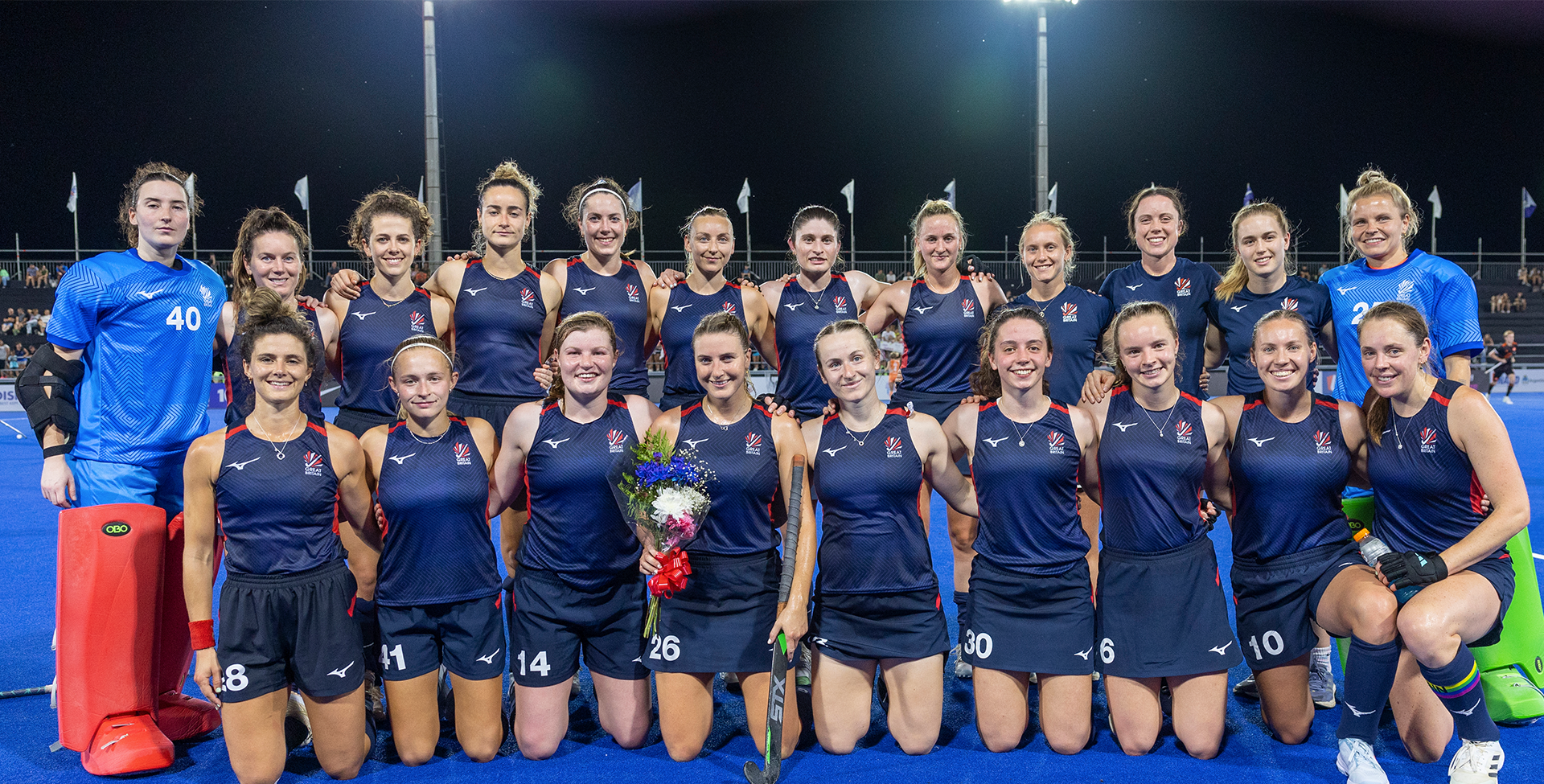
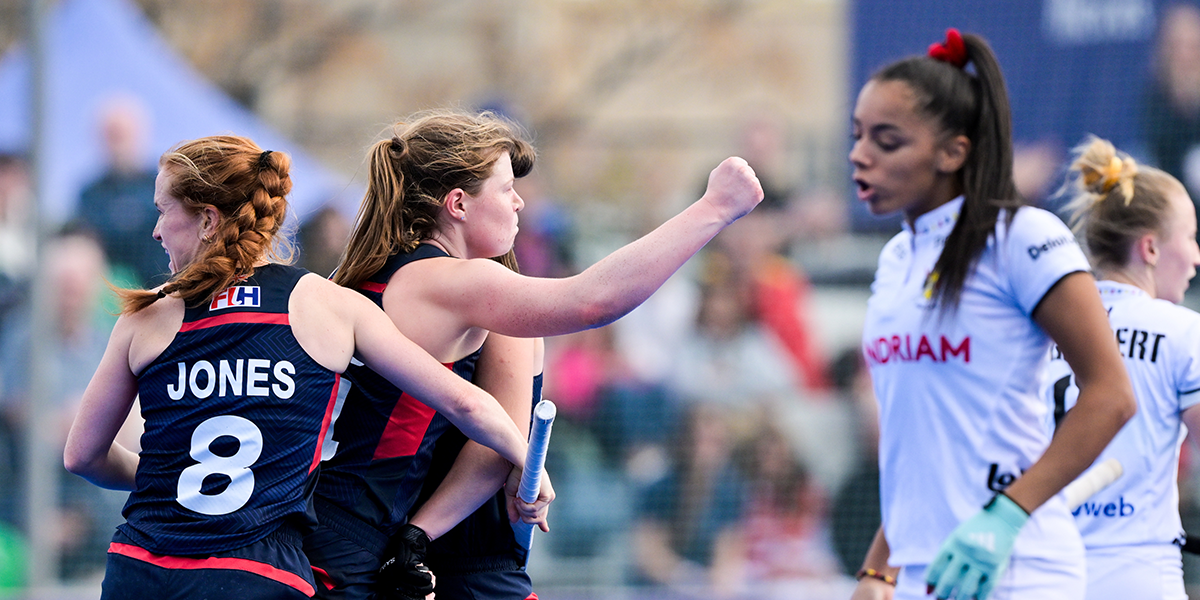
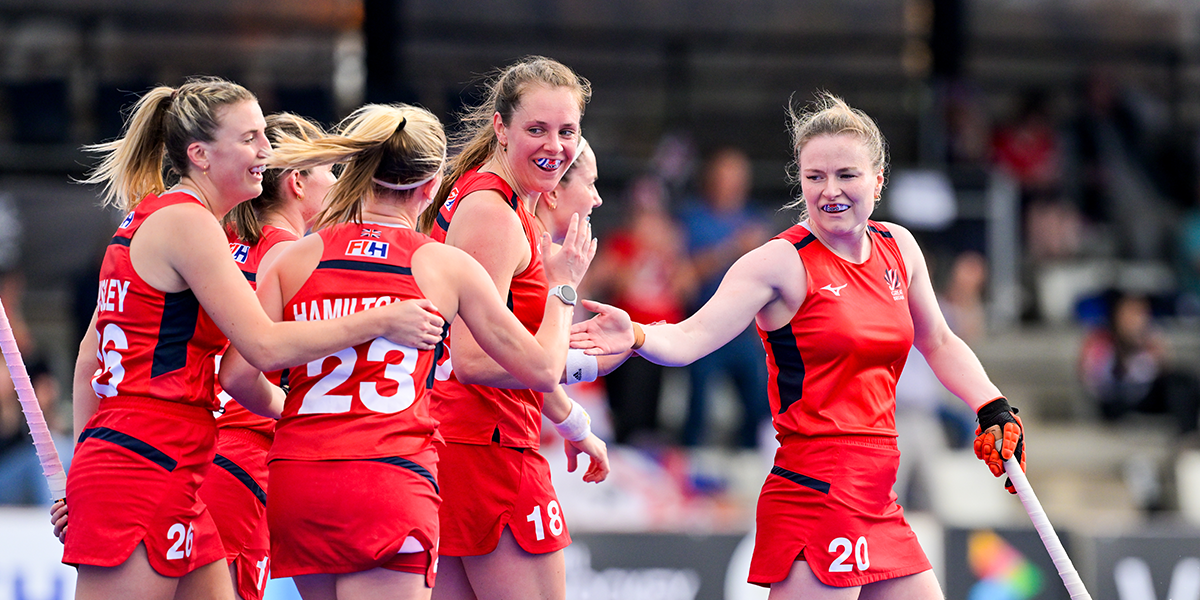
Making their own spot of history alongside the Gold triumph were Great Britain's women in their first ever Olympic. The honour of the first British Olympic goal fell to Scottish doctor Moira McLeod when her shot from a penalty corner at the end of the first half earned a 1-0 victory over Argentina in their opening match. In spite of a 1-5 thrashing from the Dutch, Britain's 2-2 draw against the USA gave them their first aim, that of a semi final place. The bare facts tell nothing of Britain's heroic semi final battle against the Koreans in which they were beaten 1 - 0. Indeed an inch may have cost Britain a place in the final. In the 17th minute, Karen Brown lobbed the goalkeeper at a penalty corner; tantalisingly the ball hit the Korean crossbar and dropped straight down. A fraction lower and it must have been a goal. A re-match with the Dutch for the Bronze medal and a 1-3 defeat left Britain reflecting on what might have been.
It was Britain's women who were to take the limelight in Barcelona when in extra time Jane Sixsmith, with a wonderful opportunist goal at a penalty corner in the 82nd minute was to score the winner in a thrilling 4-3 victory against Korea the defending Silver medallists. Britain men's reign as Olympic champions ended in the Barcelona games when in their last Pool match they were beaten 0-6 by Australia and failed to qualify for the semi finals having to settle for a disappointing sixth place which brought much discussion and recriminations on the teams return home.
After successful qualifying tournaments in Barcelona (Men) and Cape Town (Women) the British squads travelled to Atlanta. Jon Copp had taken over the men’s squad from David Whitaker just eight weeks before the games started. It was an unhappy Games for the British men who in their final game beat India 4-3 to settle for seventh place.
Britain's women had a tough start in their eight-team round robin contest in Atlanta. Their 5-0 victory against Argentina gave Britain their third successive Olympic opportunity for a Bronze medal. Sadly, although they came tantalisingly close, they lost 4-3 to the Dutch in a penalty shoot-out after a goalless draw.
Hosting the Qualifying Tournament Britain's women although losing in the final to New Zealand, marched safely through to the Sydney Games following a thorough preparation and impressive results in the nine-month build up hopes were high. Losing 0-2 to Germany in their final game Britain had to settle for a disappointing eighth place. Britain's men struggled to qualify for Sydney in Osaka. Following disappointing performances in Sydney they were outclassed by Germany losing 0-4 in their final game to settle for sixth place.
With Britian’s women failing to qualify for the 2004 Athens Games all rested on the men. Their preparation had been limited to about a year before the Games which included a qualifying tournament. It was a hesitant performance with the end result of 9th place after winning a shoot out with South Africa disappointing.
Britain’s men in Athens won their first and last games. In between things did not go well especially a 2-8 defeat at the hands of Pakistan. So the non-qualification of the women and the 9th place for the men sparked off much discussion with the outcome that major decisions were taken for the future, which included the nominated lead Nation being responsible for the whole operation and a GB presence throughout the complete four-year Olympic circle. Funding was acquired for a significant development programme along with efforts to ensure that no potential GB players were overlooked. Roger Self returned to be President of the newly reconstituted Great Britain Olympic Hockey and the Performance Director and England National coaches are already planning the path to Beijing with confidence.


![Beijing 2008 [logo] Beijing 2008 [logo]](images/beijing2008_logo_grey.gif)
![Beijing 2008 [logo] Beijing 2008 [logo]](images/london2012-grey.gif)